
Waterfalls in Iceland
Iceland has thousands of waterfalls, from small trickling streams to the most powerful falls in Europe. Heavy precipitation, glaciers and high terrain with steep escarpments create perfect conditions, and in many places you can see several waterfalls at once from the main road.
Why does Iceland have so many waterfalls?
Waterfalls form where rivers flow over rock layers of different hardness. In Iceland lava flows lie one on top of the other with softer layers in between. Rivers easily erode the soft layers while the hard basalt remains as a ledge. On top of this, Ice Age glaciers carved deep valleys and left steep walls where tributaries plunge down. Heavy rainfall and meltwater from glaciers ensure that the rivers have plenty of water.
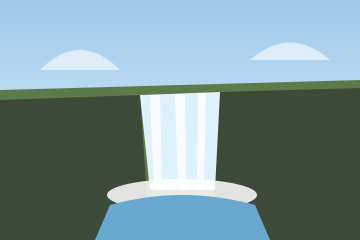
The most famous waterfalls
| Waterfall | River | Height | Region |
|---|---|---|---|
| Gullfoss | Hvítá | 32 m (in two steps) | South Iceland |
| Dettifoss | Jökulsá á Fjöllum | 44 m | Northeast Iceland |
| Skógafoss | Skógá | 60 m | South Iceland |
| Seljalandsfoss | Seljalandsá | about 60 m | South Iceland |
| Goðafoss | Skjálfandafljót | 12 m | Northeast Iceland |
| Dynjandi | Dynjandisá | about 100 m | Westfjords |
| Glymur | Botnsá | about 198 m | West Iceland |
| Hengifoss | Hengifossá | 128 m | East Iceland |
| Svartifoss | Stórilækur | 20 m | Skaftafell |
| Hraunfossar | Hvítá in Borgarfjörður | low, spread out | West Iceland |
Gullfoss
Gullfoss ("Golden Falls") is one of the three stops on the Golden Circle. The Hvítá river drops in two steps into a narrow canyon. In the early 20th century there were plans to harness the falls for power, but according to tradition Sigríður Tómasdóttir of Brattholt fought fiercely against them. She is often called Iceland's first environmentalist. Gullfoss was protected in 1979.
Dettifoss
Dettifoss in the Jökulsárgljúfur canyon is the most powerful waterfall in Europe. It is about 100 metres wide and drops 44 metres into the canyon. Its average flow is about 190 cubic metres per second, and in floods it can be many times greater. Just upstream is Selfoss, and further downstream Hafragilsfoss.
Skógafoss and Seljalandsfoss
These two waterfalls below the Eyjafjöll mountains are among the most photographed places in Iceland. Skógafoss is 60 metres high and 25 metres wide; according to legend the settler Þrasi hid a chest of gold behind it. At Seljalandsfoss a path leads behind the waterfall, and nearby is Gljúfrabúi, which falls inside a narrow gorge.
Goðafoss
Goðafoss ("Waterfall of the Gods") in Skjálfandafljót is closely linked to Iceland's conversion to Christianity. According to the story, Þorgeir Ljósvetningagoði threw his pagan idols into the falls after Christianity was adopted at the Althing in the year 1000.
Waterfalls and power plants
In the 20th century there was much debate about whether to harness the largest waterfalls. Some have disappeared or lost much of their water because of hydropower plants, while others have been protected. The debate about protecting waterfalls and wilderness is still a lively part of Icelandic politics. Read more on our page about energy.
Frequently asked questions
What is the highest waterfall in Iceland?
Glymur in Botnsdalur has long been considered the highest, about 198 m. Measurements have shown, however, that Morsárfoss, which emerged as Morsárjökull retreated, is even higher.
What is the most powerful waterfall in Iceland?
Dettifoss on the Jökulsá á Fjöllum river is the most powerful waterfall in Iceland and in Europe.
Can you walk behind a waterfall in Iceland?
Yes, a path leads behind Seljalandsfoss. Bring rain gear, as the spray is heavy.