
Geothermal Activity and Hot Springs
Geothermal heat is one of Iceland's greatest resources. Hot water and steam rise from the ground all over the country and have been used for washing and bathing for centuries. Today geothermal energy heats almost every home, produces electricity and has created a unique bathing culture.
High and low temperature
Geothermal areas are divided into two types. High-temperature areas lie within the active volcanic zone, where temperatures exceed 200 °C at a depth of one kilometre. They have steam vents, mud pots and sulphur mounds, and the ground is often brightly coloured by mineral deposits. Examples include Hengill, Krýsuvík, Námaskarð, Kerlingarfjöll and the Torfajökull area. Low-temperature areas lie outside the volcanic zone, where temperatures are below 150 °C. Here there are hot springs and pools that have been used for heating, greenhouse cultivation and bathing.
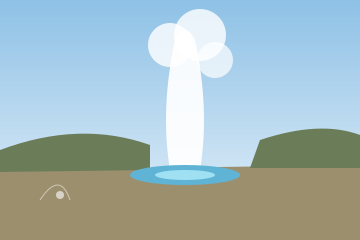
Geysir and Strokkur
Geysir in Haukadalur gave its name to geysers all over the world – the English word "geyser" comes from it. The first reliable accounts of Geysir date from the 17th century. At its peak it could erupt up to 70–80 metres high, but today it rarely erupts. Over the centuries earthquakes have alternately woken it up and sent it to sleep.
Nearby is Strokkur, the most active geyser in the country, which erupts every 5–10 minutes. The column of water usually reaches 15–20 metres but can reach 40 metres. Haukadalur is one of the three stops on the Golden Circle.
Other well-known hot springs and pools
- Deildartunguhver in Reykholtsdalur is the highest-flow hot spring in Europe, about 180 litres per second of near-boiling water.
- Hveravellir on the Kjölur route is one of the most beautiful geothermal areas, with blue pools and sinter formations.
- Námaskarð near Mývatn is a high-temperature area with bubbling mud pots and steam vents.
- Gunnuhver on Reykjanes is named after the ghost Gunna, who according to legend was trapped in the hot spring.
- Seltún in Krýsuvík is a colourful high-temperature area close to the capital.
- Reykjadalur above Hveragerði is a popular hike to a hot stream where you can bathe.
Swimming pool culture
Swimming pools are a cornerstone of Icelandic society. Almost every community has a pool with hot tubs, and people of all ages go there to swim, relax and chat. The hot tub is often called the Icelanders' "national assembly", where people discuss politics, the weather and everyday life. Swimming lessons are compulsory in primary school.
Famous bathing spots include the Blue Lagoon on Reykjanes, the Mývatn Nature Baths, Sky Lagoon in the capital area, Vök near Egilsstaðir, Hvammsvík in Hvalfjörður and the Secret Lagoon (Gamla laugin) at Flúðir, the oldest swimming pool in the country, built in 1891.
Using geothermal energy
Reykjavík's district heating began operating in 1930, and over the following decades almost the whole country was connected to geothermal heating. Today about 90% of homes are heated with geothermal water. Besides space heating, geothermal energy is used to generate electricity and in greenhouses, fish farming, snow-melting under pavements and industry. The largest geothermal power plants are Hellisheiði, Nesjavellir, Svartsengi, Reykjanes, Krafla and Þeistareykir. Read more on our page about energy.
Frequently asked questions
Does Geysir still erupt?
Geysir erupts only rarely nowadays, but Strokkur, right next to it, erupts every 5–10 minutes.
How many swimming pools are there in Iceland?
Iceland has about 120 swimming pools, most of them heated with geothermal water.
What does the word hver mean?
A hver is a hot spring, a source of hot water or steam from the ground. A goshver is a hot spring that erupts regularly – a geyser.