
Birdlife in Iceland
Iceland is a paradise for birdwatchers. About 75 species breed here regularly, and millions of seabirds live on cliffs and islands around the country. For many Icelanders, the arrival of the golden plover in spring is the surest sign that winter is over.
The puffin
The Atlantic puffin (Fratercula arctica) is the most popular bird among visitors. It is thought that more than half of all the puffins in the world breed in Iceland, with the largest colonies in the Westman Islands. Puffins come ashore in April and head out to sea in August. They dig burrows in grassy slopes, and the chicks, known as pufflings (pysjur), leave for the sea in late summer. In the Westman Islands children traditionally rescue pufflings that get lost in town, attracted by the lights, and release them at sea.
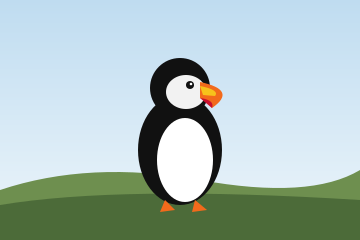
Good places to see puffins include the Westman Islands, Borgarfjörður eystri (Hafnarhólmi), Látrabjarg, Dyrhólaey, Ingólfshöfði and Grímsey. The puffin population has declined in recent decades, especially in South Iceland, and the species is now on the red list.
The gyrfalcon and other birds of prey
For centuries the gyrfalcon was a sought-after export, and the kings of Europe paid large sums for Icelandic hunting falcons. The falcon appeared in Iceland's coat of arms from 1903 to 1919, and the Order of the Falcon, the country's highest honour, is named after it. The gyrfalcon is fully protected. Other birds of prey include the white-tailed eagle, the country's largest bird with a wingspan of about 2.5 metres, the merlin and the short-eared owl. The eagle nearly died out around 1960, but the population has slowly recovered and about 90 pairs now breed, most of them around Breiðafjörður.
Bird cliffs
In bird cliffs, seabirds nest in dense colonies. The best known is Látrabjarg in the Westfjords, the westernmost point of Europe, which is about 14 km long and up to 441 m high. Guillemots, Brünnich's guillemots, razorbills, kittiwakes, fulmars and puffins nest there in their hundreds of thousands. Other famous cliffs are Hornbjarg in Hornstrandir, Hælavíkurbjarg and Krýsuvíkurberg. Eldey, southwest of Reykjanes, has one of the largest gannet colonies in the world.
Mývatn – a paradise for ducks
Lake Mývatn and the Laxá river are among the most important duck breeding areas in Europe. About 15 species of duck breed there, more than anywhere else on the continent. Barrow's goldeneye and harlequin duck breed nowhere else in Europe in significant numbers. The midges that give the lake its name ("midge lake") are the basis of the food chain. Sigurgeir's Bird Museum in the Mývatn area displays almost all Icelandic breeding birds.
Migrants and heralds of spring
- Golden plover – the beloved herald of spring. Its arrival in late March or early April always makes the news.
- Arctic tern – has the longest migration of any bird, from Antarctica to Iceland and back, about 70,000 km a year. It defends its nest fiercely.
- Whimbrel – its bubbling call is a defining sound of the Icelandic summer.
- Black-tailed godwit, redshank and snipe – common waders in wetlands.
- Great northern diver – a large water bird with a haunting call that leaves no one unmoved.
Resident birds include the rock ptarmigan, raven, snow bunting, wren and common eider. The ptarmigan is a popular Christmas dish, and its hunting is strictly limited.
Eider farming
The common eider plays a special role in Icelandic rural life. Farmers look after eider colonies and collect the down from the nests after the chicks have left. Iceland produces most of the world's eiderdown, which is used in the most expensive duvets available.
| Bird | Status | Where to see it |
|---|---|---|
| Puffin | Summer visitor, red-listed | Westman Islands, Borgarfjörður eystri |
| White-tailed eagle | Resident, fully protected | Breiðafjörður |
| Gyrfalcon | Resident, fully protected | Northeast Iceland |
| Barrow's goldeneye | Resident | Lake Mývatn |
| Arctic tern | Summer visitor | All over the country, e.g. Snæfellsnes |
| Northern gannet | Summer visitor | Eldey, Skrúður, Langanes |
Frequently asked questions
When can you see puffins in Iceland?
Puffins are around Iceland from about mid-April to mid-August.
What is Iceland's national bird?
No bird has been officially designated as the national bird, but the gyrfalcon has long been a symbol of the country, and the puffin is the most popular among visitors.
Where is Iceland's largest bird cliff?
Látrabjarg in the Westfjords is the largest bird cliff in the country, about 14 km long and up to 441 m high.